04
PXSLOS 1 — BRAND INTEGRATION & CONCEPT STORE DESIGN
PXSLOS 1 — BRAND INTEGRATION & CONCEPT STORE DESIGN
PXSLOS 1 — BRAND INTEGRATION & CONCEPT STORE DESIGN
A concept store designed as a brand statement, not a sales floor. PXLOST commissioned a flagship environment built to embody its identity in its most amplified form — a space where fashion, technology, and futurism collide. Less a place to shop, more a place to step inside the brand, the project was approached as an immersive narrative: every surface, light, and reflection engineered to make the customer feel like they've crossed into the brand's own universe.
CLIENT
PXSLOS 1 FASHION STORE
ROLE
SPATIAL DESIGN & BRAND INTEGRATION
LOCATION
TORONTO, ON
YEAR
2024
PXSLOS 1 FASHION STORE
PXSLOS 1 — BRAND INTEGRATION & CONCEPT STORE DESIGN
THE BRIEF
PXLOST 1 asked for something rare in retail: a space that doesn't try to sell, but to transmit. As a concept store, its role isn't volume — it's identity. The brief called for an environment that could deliver the brand at full intensity: futuristic, edgy, unmistakably digital, and emotionally charged enough that visitors leave with a memory rather than a receipt. The challenge was to translate a visual identity built on screens and pixels into a physical environment that hits with the same impact in real space.
PXLOST 1 asked for something rare in retail: a space that doesn't try to sell, but to transmit. As a concept store, its role isn't volume — it's identity. The brief called for an environment that could deliver the brand at full intensity: futuristic, edgy, unmistakably digital, and emotionally charged enough that visitors leave with a memory rather than a receipt. The challenge was to translate a visual identity built on screens and pixels into a physical environment that hits with the same impact in real space.
THE CONCEPT
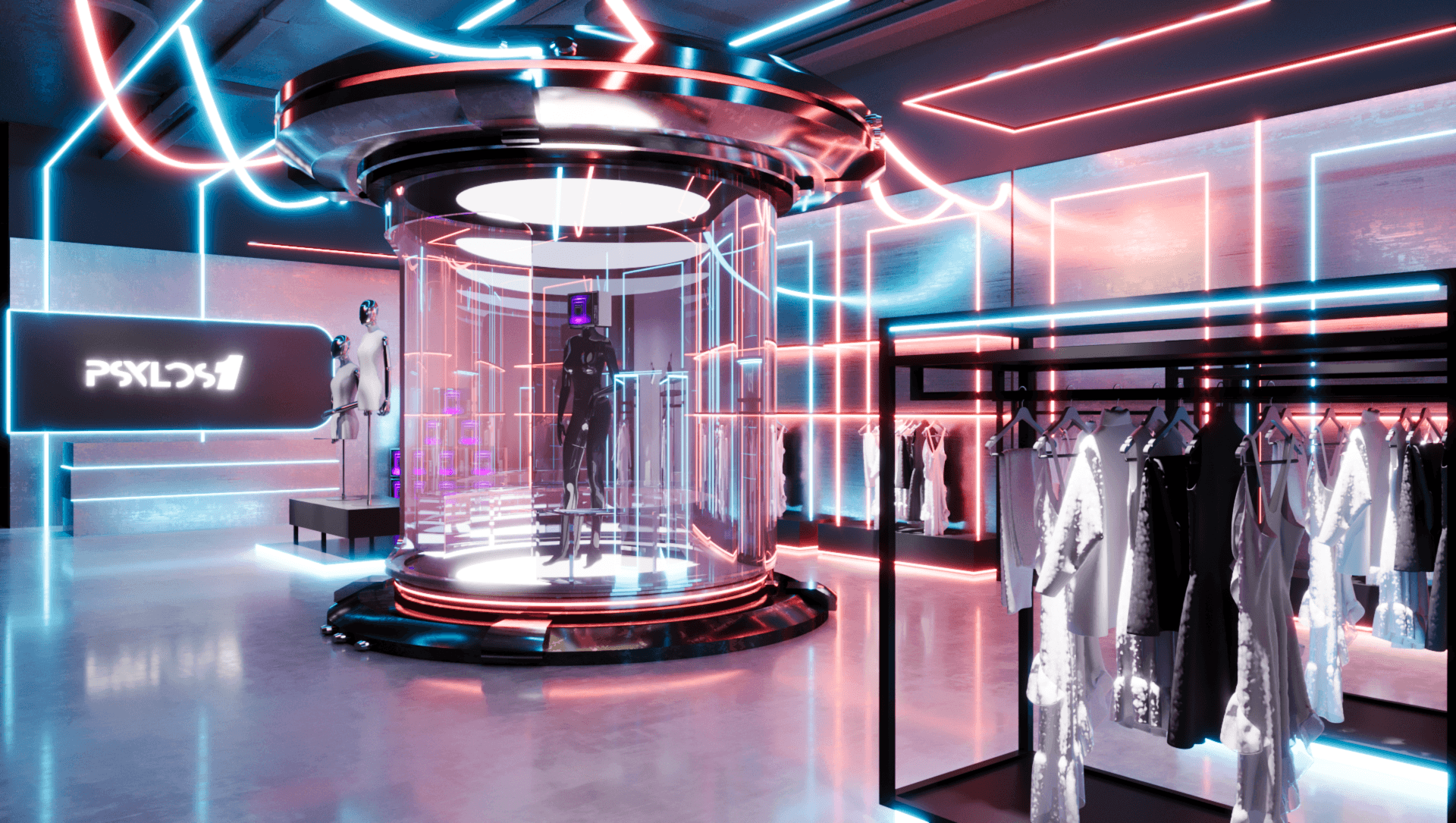
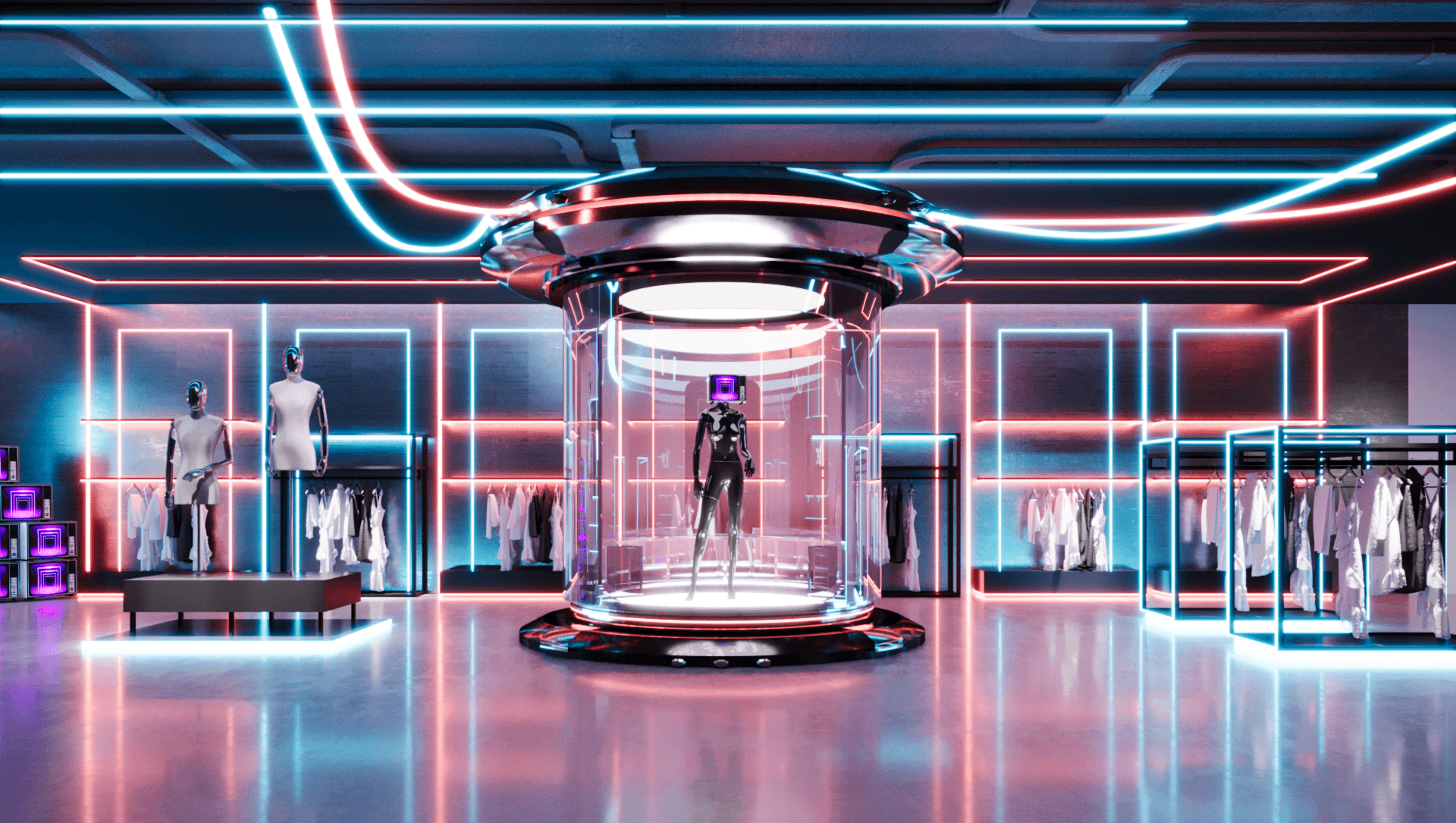
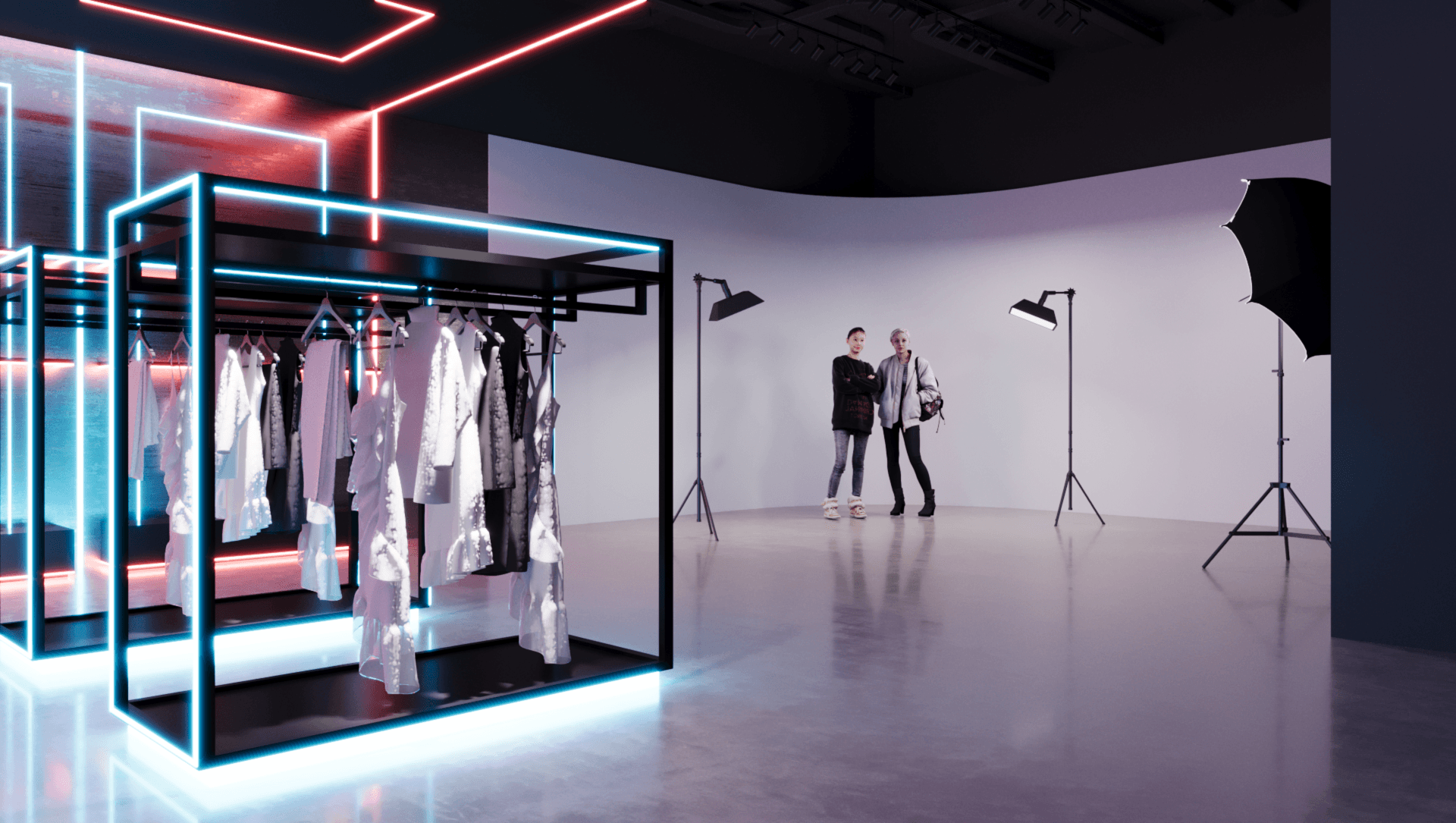
The concept treats the store as a portal rather than a room. Inspired by cyberpunk cinema, neon-lit cityscapes, and the visual language of the digital interface, the space layers reflective floors, mirrored panels, and linear neon in electric blue and magenta to dissolve the boundary between the physical and the virtual. A central glass cylinder acts as the focal stage — a futuristic display capsule that turns the product into a holographic moment rather than a static display. Light is the primary material; it draws the architecture, defines the journey, and gives every surface a sense of charge. Walking through the space is less like entering a store and more like loading into another world — the brand, rendered in real time.
The concept treats the store as a portal rather than a room. Inspired by cyberpunk cinema, neon-lit cityscapes, and the visual language of the digital interface, the space layers reflective floors, mirrored panels, and linear neon in electric blue and magenta to dissolve the boundary between the physical and the virtual. A central glass cylinder acts as the focal stage — a futuristic display capsule that turns the product into a holographic moment rather than a static display. Light is the primary material; it draws the architecture, defines the journey, and gives every surface a sense of charge. Walking through the space is less like entering a store and more like loading into another world — the brand, rendered in real time.
THE EXPERIENCE
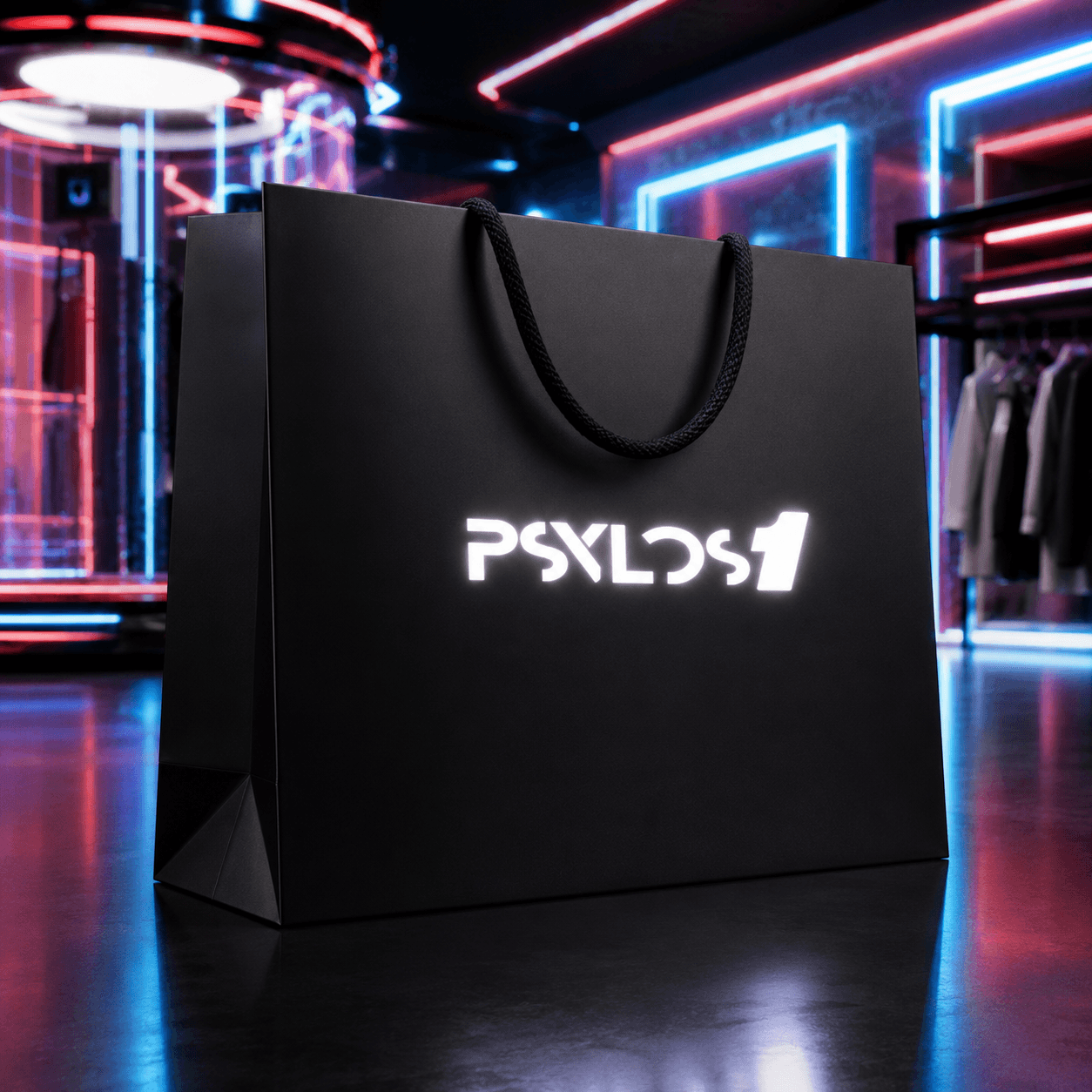
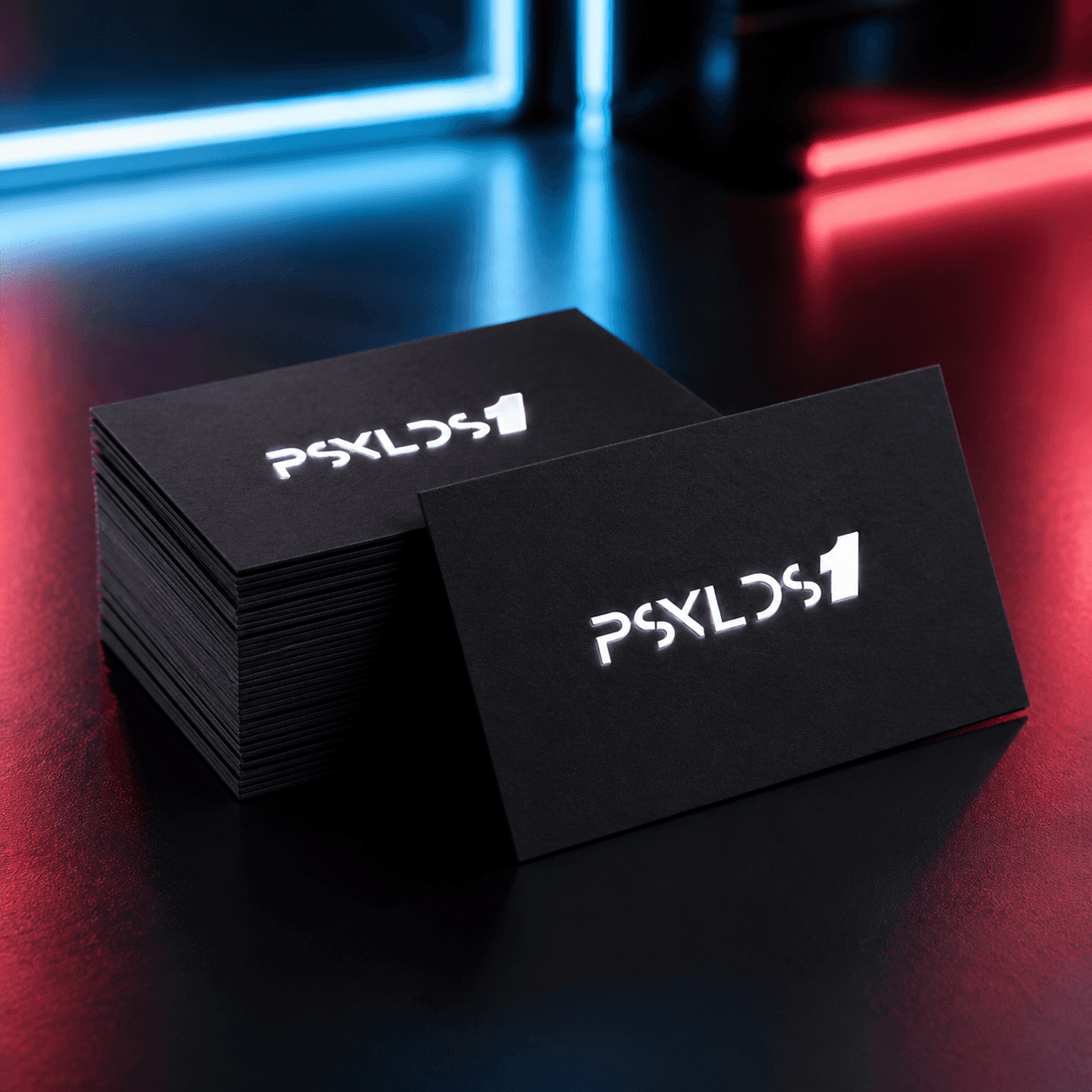
PXLOST 1 was designed for the moment before the purchase — the moment the customer crosses the threshold and feels the brand land in their body. By treating the concept store as a piece of immersive storytelling rather than a transaction space, the design lets the brand operate on a different frequency: emotional, atmospheric, slightly unreal. What's sold here isn't only the product on the rack — it's the feeling of belonging to the world the brand has built. That, in the end, is what a concept store is for: not to push a season, but to make the brand unforgettable.
PXLOST 1 was designed for the moment before the purchase — the moment the customer crosses the threshold and feels the brand land in their body. By treating the concept store as a piece of immersive storytelling rather than a transaction space, the design lets the brand operate on a different frequency: emotional, atmospheric, slightly unreal. What's sold here isn't only the product on the rack — it's the feeling of belonging to the world the brand has built. That, in the end, is what a concept store is for: not to push a season, but to make the brand unforgettable.
© KATHRYN XU
© 2026